Why TPO Roofing Is Popular for Commercial Properties
Key Takeaways
- TPO is a single-ply membrane designed for low-slope and commercial roofing applications.
- Its heat-welded seams, flexibility, UV resistance, and reflective surface make it practical for many commercial buildings.
- White TPO membranes can reflect solar energy and may help reduce cooling demand, although actual energy savings depend on the complete roofing system and building conditions.
- TPO is not automatically the right choice for every building; roof design, insulation, drainage, exposure, traffic, and installation quality all matter.
A commercial roof has a demanding job. It has to protect the building, withstand changing weather, manage water, and support the property's day-to-day operations without creating unnecessary maintenance headaches. That is one reason commercial TPO roofing in California has become a popular option for low-slope commercial buildings.
TPO, short for thermoplastic polyolefin, is a single-ply roofing membrane. Its combination of flexibility, heat-welded seams, weather resistance, and reflective surfaces gives property owners several practical advantages. But the real question is not simply whether TPO is popular. It is whether its characteristics make sense for your particular commercial property.
Why Is TPO Roofing Popular in California?
California properties can experience intense sunlight, warm temperatures, and different weather conditions depending on the region. A roofing material that can handle prolonged exposure to heat and UV radiation can therefore be attractive to commercial property owners.
TPO's reflective options add another consideration. White TPO membranes are highly reflective and emissive, which can help keep the roof surface cooler and may contribute to lower cooling demand. However, energy savings are not guaranteed and depend on factors such as insulation, HVAC efficiency, climate, utility rates, and the roof's properties.
This makes TPO roofing in California worth considering for buildings where solar exposure and cooling loads are important parts of the roofing decision.
How Do Heat-Welded Seams Help?
One of TPO's most useful features is its heat-welded seam technology.
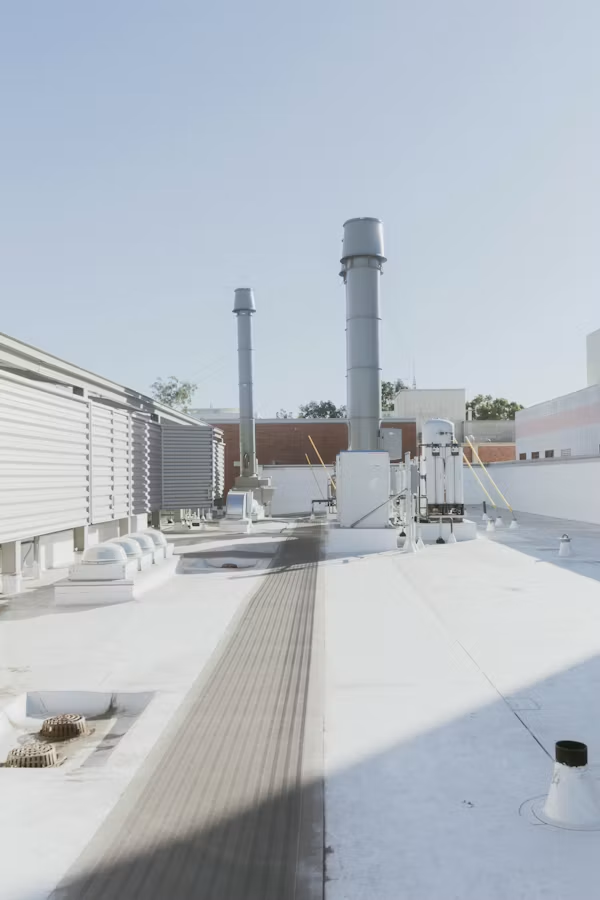
During installation, specialized equipment uses heat to fuse overlapping sections of membrane. When properly installed, these welded areas create strong, continuous connections between sheets. GAF notes that heat-welded seams provide greater seam strength than taped and other seam types.
For a commercial property owner, this is more than a technical detail. Seams and penetrations are critical areas of any membrane roof because poor workmanship can create opportunities for water intrusion.
That is why the quality of installation matters just as much as selecting the membrane itself.
Is TPO Suitable for Busy Commercial Properties?
It can be, particularly when the roofing system is properly designed for the building and its expected use.
Commercial roofs often contain HVAC equipment, vents, drains, skylights, electrical equipment, and other penetrations. Maintenance personnel may also need periodic roof access.
The membrane's flexibility and available installation methods allow TPO systems to be configured for different project requirements. Depending on the building, TPO can be mechanically attached, adhered, or installed using other approved methods.
What Are the Main Advantages of TPO for Commercial Buildings?
The appeal of TPO becomes clearer when its characteristics are considered together.
| TPO Feature | Why It Matters for Commercial Properties |
|---|---|
| Heat-welded seams | Creates strong membrane connections when properly installed |
| Reflective surface | Can help reduce heat absorption and cooling demand |
| UV resistance | Useful for roofs exposed to prolonged sunlight |
| Flexibility | Helps the membrane accommodate different roof conditions |
| Single-ply construction | Provides a relatively straightforward membrane roofing system |
| Multiple installation methods | Allows systems to be selected according to project requirements |
| Repairability | Damaged areas can often be addressed without replacing the entire roof |
These benefits help explain why TPO continues to be widely used for low-slope commercial roofing. GAF describes TPO as a popular single-ply option with performance characteristics including weather resistance, flexibility, reflectivity, and heat-welded seams.
Can TPO Help With Commercial Building Energy Performance?
Potentially, yes. Reflective roofing can reduce the amount of solar energy absorbed by the roof surface, which can be valuable for buildings in warm climates.
A white reflective membrane may help reduce heat transfer into the building and therefore reduce some cooling demand. But it is important not to treat the roof color as a guaranteed energy-saving solution.
The building's insulation, HVAC system, roof assembly, climate, operating schedule, and other factors all influence energy performance.
For that reason, property owners should evaluate the complete roofing assembly rather than selecting a membrane based on reflectivity alone.
Is TPO Roofing a Good Choice for Commercial Buildings?
TPO can be a good choice for many commercial buildings, particularly low-slope properties where flexibility, UV resistance, reflective performance, and heat-welded seams are valuable.
However, the right roofing material depends on the building's structure, climate exposure, drainage, maintenance requirements, budget, and long-term plans.
A professional roof assessment can help determine whether TPO fits the property instead of treating it as a universal solution.
What Should Property Owners Check Before Installing TPO?
Choosing the membrane is only the beginning. Before approving a commercial roofing project, ask about:
- Existing roof condition: Determine whether the current roof requires replacement, repair, or may qualify for a recover system.
- Drainage: Make sure water has appropriate paths to drains or other designed outlets.
- Insulation: Evaluate the insulation and overall roof assembly rather than focusing only on the membrane.
- Membrane thickness: Discuss which thickness is appropriate for the building and expected conditions.
- Attachment method: Mechanical attachment, adhesives, or other methods may suit different structures.
- Roof traffic: Identify areas where maintenance personnel will regularly access equipment.
- Installation quality: Ask how seams, penetrations, edges, drains, and other details will be handled.
The smallest roof detail can become the biggest headache if it is overlooked during installation.
Commercial TPO Roofing From Alcon's Roofing Inc.
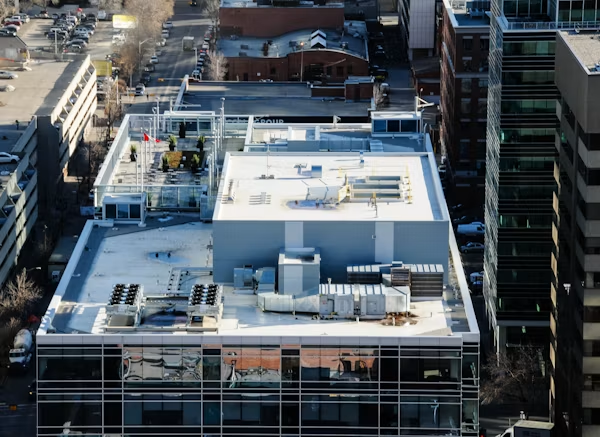
Alcon's Roofing Inc. provides commercial roofing services for property owners looking to protect and maintain their buildings. For businesses considering commercial flat roofing in California, understanding the condition of the existing roof and the requirements of the building is an important first step.
You can explore Alcon's commercial TPO roofing services to learn more about TPO roofing and how it may fit a commercial roofing project.
Considering TPO for your commercial property?
Contact Alcon's Roofing Inc. for a professional roof assessment and a free quote.
Frequently Asked Questions
How long can a TPO roof last?
Is TPO better than other commercial roofing materials?
Can TPO be installed over an existing commercial roof?
Does white TPO reduce cooling costs?
Free 24-hour quote in California.
No pressure, no door-knocking, no scripts. Just Alcon on the phone.