How Do You Fix Standing Water on a Commercial Flat Roof?
Key Takeaways
- Standing water commonly results from blocked drains, inadequate slope, or structural deflection.
- Clearing drainage systems is an important first step, but recurring ponding requires investigation.
- Tapered insulation and crickets can help redirect water toward roof outlets.
- TPO roofing offers reflective performance and heat-welded seams, but proper drainage design remains essential.
- Regular inspections help identify drainage and membrane problems before they become costly repairs.
A commercial flat roof should direct rainwater toward designated drainage points, not turn into a temporary swimming pool. Standing water can indicate blocked drains, poor roof slope, or structural problems. For businesses considering commercial roofing in Fresno, understanding why water accumulates and how to correct it can help prevent leaks, membrane damage, and expensive repairs.
1. Identify Why Water Is Collecting on the Roof
Before choosing a solution, determine why water isn't draining properly. Standing water, also called ponding, occurs when rainwater remains on a roof instead of flowing toward drains or scuppers.
Common causes include:
- Blocked roof drains: Leaves, dirt, packaging materials, and other debris can restrict water movement.
- Insufficient roof slope: Poorly designed drainage paths can leave water trapped in low areas.
- Structural deflection: A sagging roof deck can create depressions where water collects.
- Improperly positioned equipment: HVAC units and rooftop installations can interrupt drainage paths.
- Damaged drainage components: Broken drain connections or poorly positioned scuppers can prevent effective water removal.
Identifying the underlying cause matters because simply removing accumulated water won't prevent it from returning.
2. Clear Drains and Inspect Drainage Systems
One of the first steps in addressing ponding water is checking whether the drainage system works correctly.
Commercial roofs commonly use internal drains, gutters, and scuppers to move rainwater away from the building. When these components become obstructed, water can accumulate even when the roof has an otherwise suitable slope.
A maintenance inspection should include:
- Removing debris from accessible drain openings.
- Checking drain covers and strainers for blockages.
- Inspecting scuppers and downspouts.
- Looking for damaged connections or signs of leakage.
- Checking whether water flows freely toward designated outlets.
Drainage inspections should also happen before the rainy season and after major storms. Avoid walking through deep standing water or attempting to clear drains without appropriate fall protection and professional guidance.
3. Correct Roof Slope With Tapered Insulation
What happens when drains are clear, but water continues collecting in the same locations?
The problem may involve the roof's underlying slope. Tapered insulation can help create a gradual drainage path toward roof outlets without necessarily requiring a complete structural redesign.
Roofing professionals may also install crickets and saddles, which are raised, sloped sections designed to direct water around rooftop equipment or toward nearby drains.
These improvements are particularly useful when HVAC units, roof penetrations, or existing low spots interrupt normal drainage.
According to the Asphalt Roofing Manufacturers Association, proper roof slope and drainage planning are important for reducing ponding water. Its guidance discusses tapered insulation and drainage components as part of effective roof design.
4. Repair Damaged Roofing Membranes
Standing water becomes a bigger concern when the waterproofing membrane already has weaknesses.
Inspect the roof for:
- Open or separating membrane seams.
- Cracks, punctures, or tears.
- Loose flashing around rooftop equipment.
- Deteriorated sealant around penetrations.
- Blisters or damaged membrane sections.
These problems can create opportunities for water infiltration, especially when water remains around vulnerable areas.
The appropriate repair depends on the membrane material and the extent of damage. Applying an incompatible coating or patching material can create additional problems, so repairs should follow the roofing manufacturer's specifications.
5. Consider TPO Roofing for Long-Term Protection
For commercial properties with aging or deteriorating flat roofs, replacing the existing roofing system may be more practical than repeatedly repairing damaged sections.
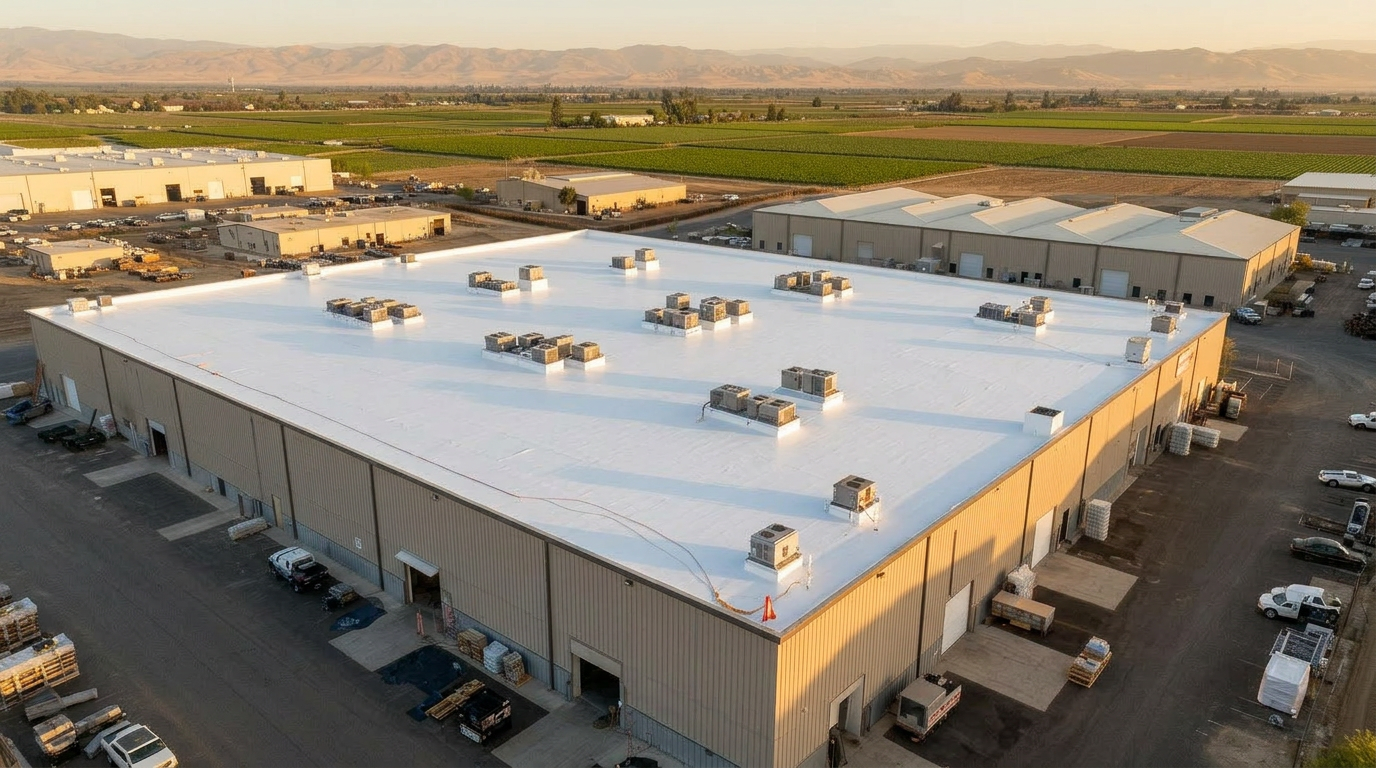
TPO (thermoplastic polyolefin) roofing is a single-ply membrane system commonly used on commercial flat and low-slope roofs. It is valued for its reflective surface, heat-welded seams, and compatibility with different commercial roofing configurations.
Some important benefits include:
- Reflective performance: White TPO membranes can reflect sunlight and help reduce roof surface heat absorption.
- Heat-welded seams: Properly welded seams create continuous connections between membrane sheets.
- Lightweight construction: Single-ply membranes add relatively little weight compared with some traditional roofing assemblies.
- Maintenance considerations: Damaged sections and seams can often be inspected and repaired without replacing the entire system.
Businesses researching TPO roofing in Fresno should consider the building's drainage requirements, insulation needs, roof condition, and expected maintenance before selecting a system.
Importantly, installing a new membrane alone does not correct an existing drainage problem. Proper slope and outlet placement must be addressed during the roofing project.
6. Prevent Future Ponding With Regular Maintenance
Even a professionally installed commercial roof needs routine attention. A maintenance schedule helps identify small drainage problems before they develop into larger roofing concerns.
| Maintenance Task | Recommended Attention |
|---|---|
| Clear drains and scuppers | Routine inspections and after storms |
| Check membrane seams | During scheduled roof inspections |
| Inspect flashing | After repairs or equipment work |
| Check low spots | After significant rainfall |
| Review rooftop equipment drainage | During maintenance visits |
Property managers should also ensure that HVAC condensate lines discharge into appropriate drainage systems rather than continuously releasing water onto the roof.
For additional guidance, the National Roofing Contractors Association provides professional roofing resources covering roof maintenance and system performance.
7. When Is Professional Roof Replacement Necessary?
Not every ponding issue requires a complete roof replacement. Sometimes, clearing drains, repairing membrane damage, or improving localized drainage can resolve the problem.
However, replacement may be worth considering when:
- The existing membrane has widespread deterioration.
- Water infiltration has affected multiple roof sections.
- Repeated repairs are no longer providing reliable results.
- The roof has extensive drainage or insulation problems.
- The existing roofing system has reached the end of its useful service life.
For property owners exploring commercial flat roofing in Fresno, a professional assessment should consider both the waterproofing system and the roof's drainage design.
Commercial Roofing Solutions From Alcon's Roofing Inc.
Alcon's Roofing Inc. provides commercial roofing services for businesses and property owners throughout Fresno and California's Central Valley. The company handles flat and low-slope roofing projects, including TPO systems designed for the region's hot conditions.
Family-owned and backed by more than 35 years of roofing experience, Alcon's offers roof inspections, repairs, maintenance, and complete roofing installations. Its approach includes direct owner involvement, written estimates, and workmanship and material warranties.