Best Roofing Materials for Central Valley Heat: Shingles vs. Tile vs. TPO
Key Takeaways
- Asphalt shingles are the most affordable option, but poor attic ventilation can cut their lifespan from 25 years down to as little as 12 in Fresno's summer heat.
- Tile roofing is essentially heat-proof and can exceed 50 years, but it's heavy enough to require framing checks and needs an underlayment refresh around year 25 to 30.
- TPO membrane reflects a large majority of solar radiation and is the top choice for flat or low-slope roofs, meaningfully cutting summer cooling loads.
- The right material depends on roof pitch, how long you plan to stay in the home, and budget not on brand names or which option is trending.
- Ventilation, underlayment quality, and flashing details determine whether any of these three materials actually reaches its full rated lifespan.
There's No Single “Best” Roof for This Climate
Every spring brings the same question from homeowners around Fresno, Clovis, and Madera: what's the best roofing material for our heat? It's a fair question, and it deserves an honest answer rather than a sales pitch for whatever happens to be the highest-margin product that week. The Central Valley is genuinely one of the tougher climates in California to roof triple-digit days from June through September, relentless UV that doesn't let up, tule fog settling in every winter, and just enough wind rolling off the foothills to peel up anything that wasn't installed correctly the first time. Homeowners comparing asphalt shingle roofing in California against tile or TPO are really asking three separate questions at once: how long do I want this roof to last, what's my roof's pitch, and what am I willing to spend upfront versus over time. Answering those three questions first makes the material choice almost obvious.
Asphalt Shingles: The Workhorse with a Catch
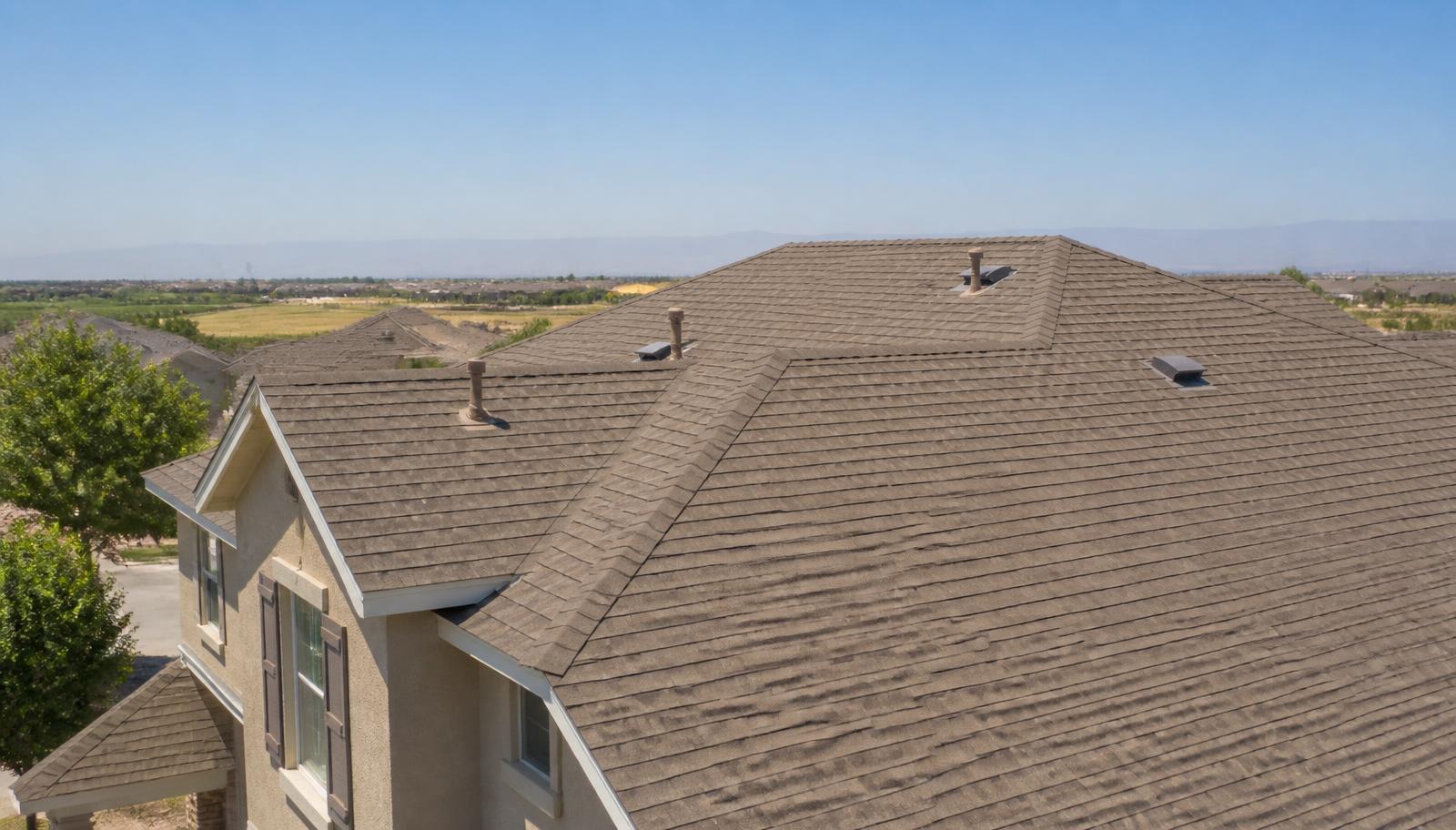
Architectural asphalt shingles remain the most common roof in the Valley for good reason they're affordable, they install fast, and a quality 30-year shingle from a reputable manufacturer can genuinely reach 20 to 25 years here, provided the attic underneath is properly ventilated. That last part is the catch almost nobody mentions upfront. In a Fresno attic that hits 150°F on a July afternoon, the same shingles that would last two decades in a well-ventilated home can get cooked down to 12 to 14 years instead. The material isn't the weak link; the airflow underneath it is.
Getting the full lifespan out of asphalt shingles in this climate comes down to three decisions made before installation day: choosing a lighter or cool-roof-rated color to reduce heat absorption, insisting on proper ridge ventilation so hot attic air actually has somewhere to escape, and refusing to cut corners on the underlayment beneath the shingles themselves.
It's worth noting that darker shingle colors don't just look different they perform differently. A dark charcoal or black shingle absorbs meaningfully more solar heat than a lighter tan or gray option, and in a climate already pushing attic temperatures toward the extreme, that extra absorbed heat translates directly into accelerated granule loss and a shorter usable life. Color is one of the few genuinely free decisions in this entire process, and it's one homeowners often make purely on curb appeal without realizing it's also a performance decision.
Tile: Built for This Climate
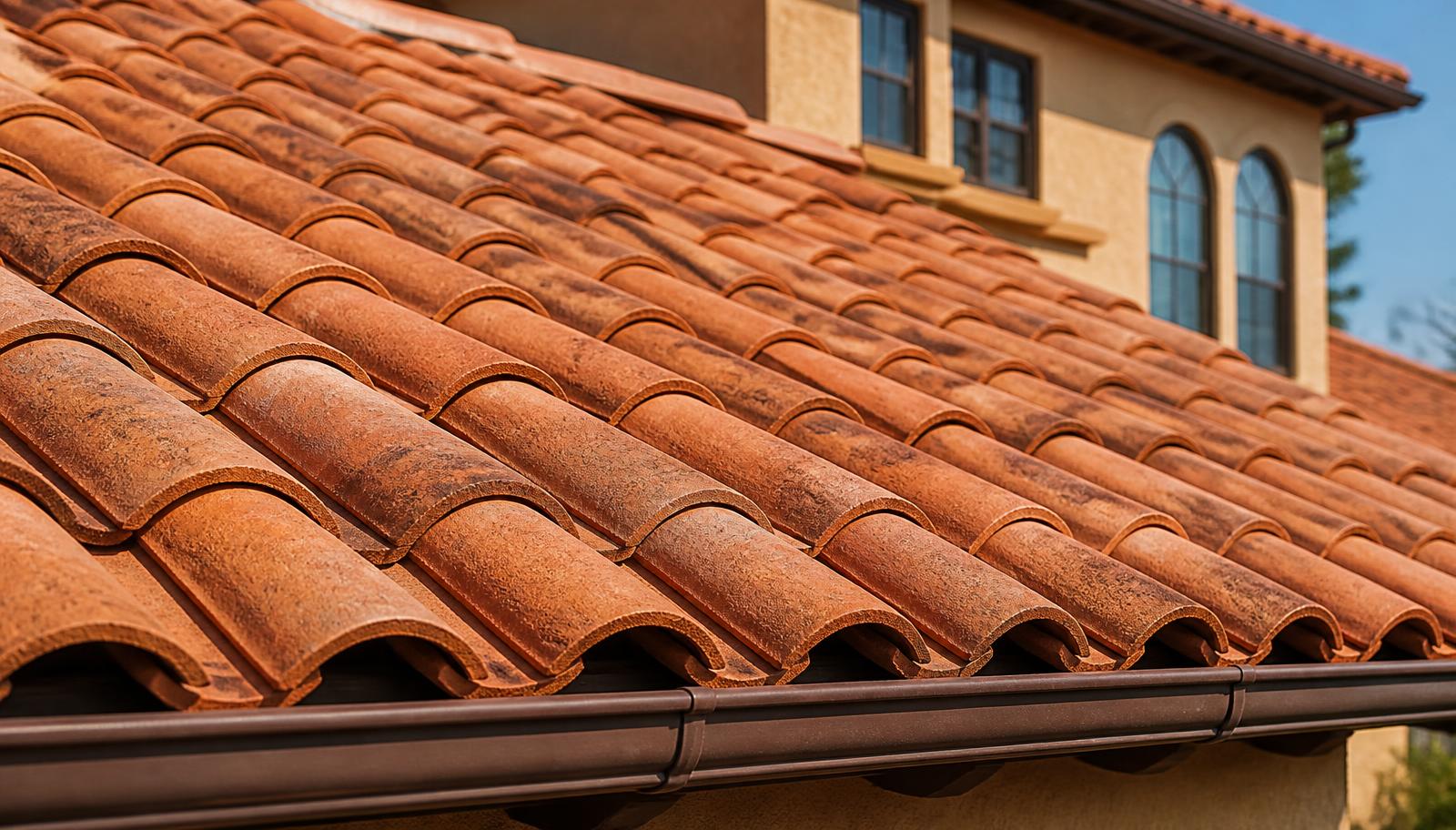
Concrete and clay tile roofs dominate older Clovis and northwest Fresno neighborhoods, and it's not purely an aesthetic choice. Tile is essentially heat-proof the tiles themselves don't degrade under UV exposure, and the air gap underneath each individual tile creates a natural ventilation channel that keeps the attic dramatically cooler than a shingle roof ever could. Measured attic temperature differences of 20 to 30°F between identical floor plans, one tiled and one shingled, aren't unusual.
The tradeoffs are real, though. Tile can add 600 to 1,000 pounds per 100 square feet, which means older framing sometimes needs reinforcement before installation. The underlayment sitting beneath the tiles, not the tiles themselves, typically needs replacement every 25 to 30 years. And tile is more fragile underfoot than most people expect a technician who doesn't know how to properly walk a tile roof can crack tiles that had decades of life left in them. For anyone planning to stay in a home 20-plus years, tile is genuinely hard to beat in this climate, as long as the mid-life underlayment swap is factored into the long-term plan from the start.
TPO: The Reflective Champion for Flat Roofs
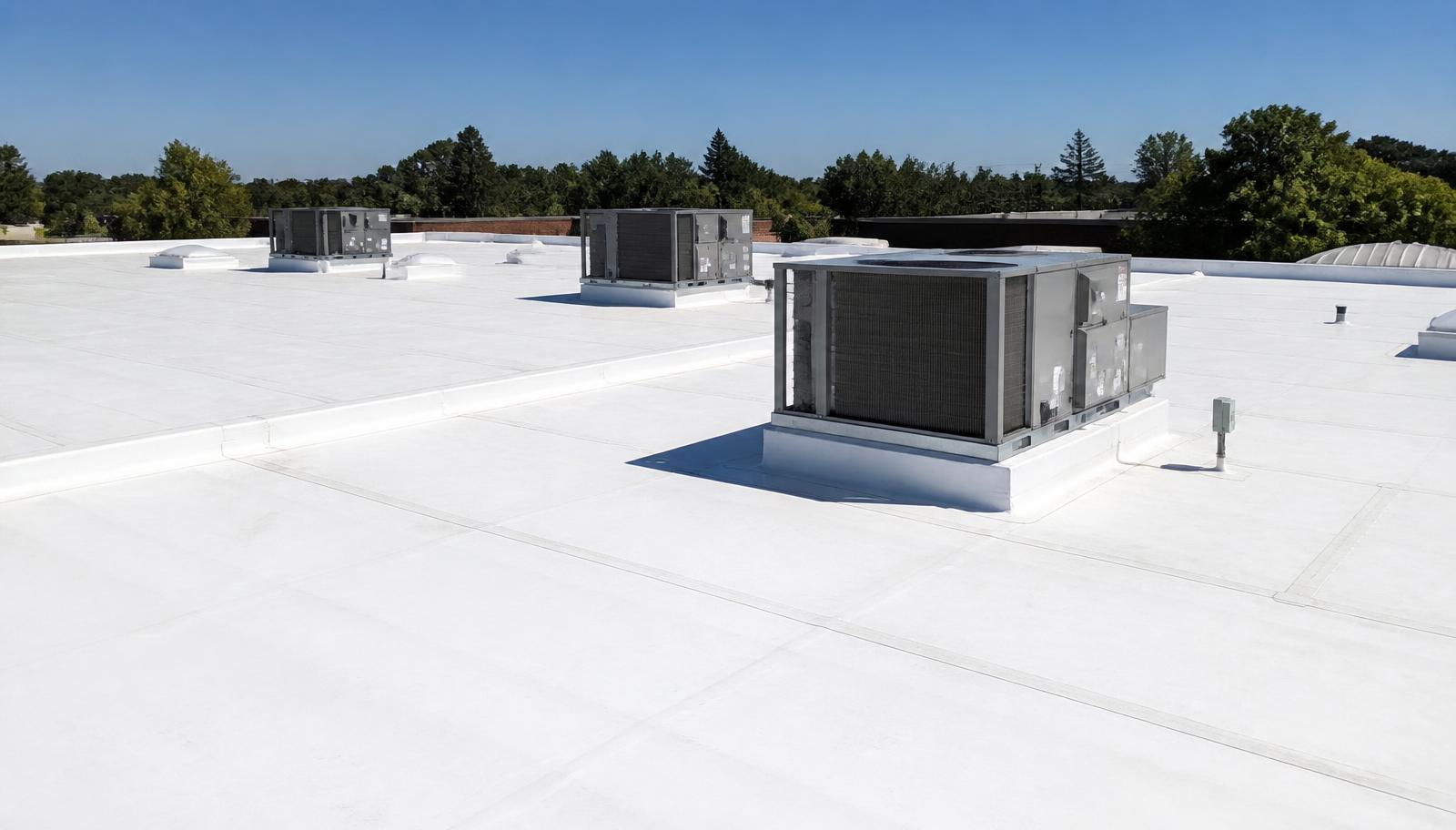
TPO, short for thermoplastic polyolefin, is a single-ply white membrane that reflects the large majority of solar radiation back into the sky instead of letting the building soak it up. According to the EPA's research on cool roofing, a reflective roof can stay significantly cooler than a conventional dark roof and reduce peak cooling demand by roughly 11 to 27%, which is exactly the kind of difference that shows up directly on a summer utility bill for a warehouse in Selma or a flat-roof addition in central Fresno. This is why TPO is the material installed most often on commercial buildings and flat residential additions across the Valley.
The catch with TPO is that workmanship carries almost the entire performance burden. The Cool Roof Rating Council notes that a cool roof's actual performance depends on both how much solar energy it reflects and how efficiently it re-emits the heat it does absorb properties that only hold up over time when the membrane is installed and seamed correctly. A poorly welded TPO seam can leak within a couple of years, which is exactly why TPO should only be installed by a roofer who can demonstrate real experience with the material, not a general contractor trying it for the first time on someone's roof.
| Material | Typical Lifespan (Valley Heat) | Best For | Underfoot / Maintenance Note |
|---|---|---|---|
| Asphalt shingle | 12–25 years, ventilation-dependent | Steep-pitch homes, 10–15 year ownership horizon | Easy to walk and repair; ventilation is critical |
| Tile | 50+ years (tile); 25–30 years (underlayment) | Long-term ownership, Spanish/Mediterranean style homes | Fragile underfoot; requires careful walking technique |
| TPO | 20–30 years | Flat or low-slope roofs, residential or commercial | Seam quality determines long-term leak resistance |
So Which One Should You Actually Pick?
Honestly, it comes down to three factors: the pitch of the roof, how long the homeowner plans to stay, and the budget available today versus over time. For a steep-pitch residential roof with a 10-to-15-year ownership horizon, quality architectural asphalt with proper ventilation is the practical choice. For steep-pitch homes with a long-term ownership plan, especially ones originally built for it, tile is difficult to beat. And for flat or low-slope sections, whether residential or commercial, TPO installed by a genuinely experienced crew is the clear winner.
It's worth naming what to avoid just as clearly as what to choose: cheap 3-tab asphalt, which simply cannot survive Valley heat gracefully; wood shake, which carries too much fire risk as fire season keeps expanding across the state; and any “lifetime” metal product being sold door-to-door at a price that sounds too good to be verified. There's no free lunch on a Central Valley roof.
What Actually Determines Your Roof's Lifespan
All three materials perform well here when they're matched to the right home and installed correctly. The mistake seen most often isn't choosing the wrong material it's choosing the right material and then skimping on the ventilation, underlayment, or flashing underneath it. The roof anyone can see from the street is only half the job. Alcon’s Roofing Inc has spent over three decades serving Fresno, Clovis, Madera, and the surrounding Central Valley, and the conversation with every homeowner always starts with ventilation and underlayment, not just shingle color or brand name, because that conversation is what actually determines whether a roof reaches its full expected lifespan.
Not sure which roofing material fits your home?
Get a straight answer on shingles, tile, or TPO — including the ventilation and underlayment details that decide how long your roof really lasts in Valley heat. Free quote within 24 hours.
Frequently Asked Questions
How long does a roof actually last in Central Valley heat?
Is tile roofing worth the extra upfront cost in Fresno?
Can TPO roofing be installed on a typical residential home?
What's the biggest mistake homeowners make when choosing a roofing material?
Free 24-hour quote in Fresno.
No pressure, no door-knocking, no scripts. Just Alcon on the phone.